
📊Sustainable Shopping on a Budget
How to Be Eco-Conscious Without Breaking the Bank
How to Be Eco-Conscious Without Breaking the Bank
Introduction
Many people associate “sustainable living” with high-end organic brands or expensive eco-labels — but that’s far from the truth. In fact, the heart of sustainability lies in mindful consumption, not in how much you spend. JeftinStore.com stands as living proof that sustainability doesn’t have to be expensive. From everyday household items to wardrobe staples, it shows that eco-conscious living is within reach for everyone, offering practical alternatives that don’t strain your wallet or the planet.
This guide explores how to build a more sustainable lifestyle — one conscious choice at a time — even when you’re on a budget.
1. “Buy Less, Choose Well”: The Core Principle of Smart Sustainability
The first step to sustainable shopping is not about where you buy — it’s about how you think. The phrase “Buy Less, Choose Well”, popularized by designer Vivienne Westwood, captures the mindset shift we need.
Instead of impulsive buying or chasing discounts, sustainability invites you to prioritize quality, utility, and longevity.
- Buy Less: Ask yourself before every purchase — Do I really need this? Often, our buying habits are driven by marketing or emotion rather than need. Reducing unnecessary consumption saves money and natural resources.
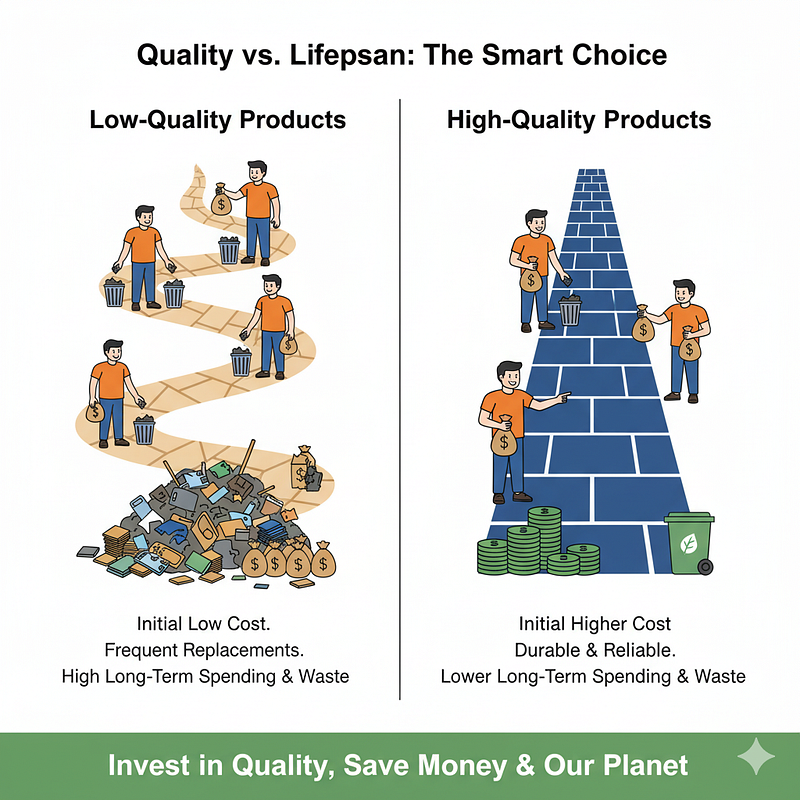
- Choose Well: When you do buy, invest in durable, well-made items. Whether it’s a piece of clothing, kitchenware, or electronics, a slightly higher upfront cost often pays off through longer life and reduced waste.
Think of it this way: one well-made shirt that lasts 3 years is worth far more than five cheaply made ones that fall apart after a few washes. Conscious consumption is not about deprivation — it’s about intentional ownership.
2. The Logic of “Cost-Per-Wear”: Rethinking Value Beyond the Price Tag
Price tags can be misleading. What seems “cheap” at first glance can turn costly over time when replaced frequently. The Cost-Per-Wear (CPW) concept helps you measure true value.
Cost-Per-Wear formula:
CPW = Total Cost ÷ Number of Times Worn
For instance:
- A ₹1,000 fast-fashion shirt worn 5 times = ₹200 per wear
- A ₹3,000 quality shirt worn 100 times = ₹30 per wear
Over time, the second option is both more economical and sustainable.
This principle applies to more than clothes — from shoes to furniture to gadgets. When you shift focus from upfront cost to longevity, you naturally gravitate toward better-quality and more sustainable choices.
3. Embrace Thrift, Repair, and Local Artisans
Sustainability isn’t about perfection — it’s about progress. Three accessible ways to live more sustainably while saving money are thrifting, repairing, and supporting local artisans.
Thrift Stores and Secondhand Platforms
Thrifting has shed its stigma and become a mainstream, budget-friendly way to shop sustainably. Buying secondhand keeps items in circulation and diverts them from landfills.
Online marketplaces, thrift stores, and community swap events can yield high-quality finds for a fraction of retail cost — often with unique, vintage character.
Tip: Learn how to assess fabric quality, stitching, and fit so you can spot durable pieces even in secondhand shops.
Repair and Upcycle Before You Replace
Small repairs can drastically extend product life — a simple fix like re-stitching a seam or polishing old leather shoes can save hundreds.
DIY upcycling, such as turning worn jeans into shorts or tote bags, not only saves money but also sparks creativity.


Support Local Artisans
Buying from local makers reduces transport emissions and strengthens community economies. Many artisans use sustainable materials and traditional techniques that emphasize durability over mass production.
Plus, you often get custom-made or one-of-a-kind items — value that can’t be replicated by big-box stores.
4. Five Actionable Tips for Sustainable Shopping on a Budget
Building a sustainable lifestyle doesn’t happen overnight, but small, consistent steps can make a big difference. Here are five practical, low-cost habits to start with:
1. Do a “Need Audit” Before You Shop
Before every purchase, check what you already own. Make a quick inventory and identify gaps. You’ll often find that what you thought you needed was just forgotten in the back of a drawer.
🪄 Bonus: This habit curbs impulse spending and helps you develop mindful awareness of your consumption patterns.
2. Choose Multi-Use and Refillable Products
Opt for products that serve more than one purpose — like multipurpose cleaners, reversible clothing, or refillable personal care items.
JeftinStore.com offers everyday sustainable essentials that prove eco-conscious living is within reach for everyone.
3. Learn Basic Repair Skills
A few simple skills — sewing buttons, patching holes, polishing shoes, or tightening screws — can save thousands annually. YouTube tutorials and community workshops make these skills easy and fun to learn.
Pro tip: Create a small “repair box” at home with needles, thread, glue, spare buttons, and patches. It’s both sustainable and empowering.
4. Swap or Borrow Instead of Buying New
For occasional-use items — like formal wear, tools, or event décor — borrowing or swapping makes more sense than buying.
Join local “Buy Nothing” groups, clothing swaps, or online sharing communities. It saves resources and fosters a sense of community.
5. Plan Purchases and Avoid Fast-Fashion Cycles
Flash sales and microtrends are designed to trigger impulsive buying. Instead, create a seasonal shopping list based on real needs and allocate a fixed budget for it.
Buy off-season (e.g., winter wear in summer) for better prices, and always check for ethical, sustainable alternatives before clicking “buy.”
Conclusion: Smart Sustainability Starts with Awareness
Sustainable shopping isn’t about spending more — it’s about spending smarter. By understanding what we buy, how long it lasts, and where it comes from, we transform consumption into a conscious act of care — for both our wallets and the planet.
Remember:
- Buy less, but choose better.
- Consider cost-per-wear before chasing discounts.
- Thrift, repair, and support local artisans whenever possible.
- Adopt small habits that make sustainability a lifestyle, not a luxury.
Every purchase is a vote for the kind of world you want to live in. When enough people make informed choices, collective impact follows — cleaner ecosystems, fairer trade, and less waste.
Let your journey toward mindful living start today. Explore how affordable sustainability can be at JeftinStore.com — where practical, planet-friendly living meets everyday value.
Sources & References
- Ellen MacArthur Foundation — A New Textiles Economy: Redesigning Fashion’s Future (2017).
- Green Strategy — Sustainable Fashion Consumption and the “Buy Less, Choose Well” Mindset.
- WRAP (Waste & Resources Action Programme) — Valuing Our Clothes Report.
- Good On You — Understanding Cost-Per-Wear and Ethical Consumerism.
Institutional Disclaimer
The Triquetrus Institute is an internal research and reflection initiative of Triquetrus Initiatives LLP (India). All content published by the Institute is intended solely for educational and discussion purposes. It does not constitute legal, financial, investment, regulatory, or professional advice and should not be relied upon as such.
Attribution and Usage Rights
Images accompanying this article have been generated using artificial intelligence models and are presented for illustrative purposes only. Such images are synthetic in nature and should not be interpreted as factual representations of real persons, events, or conditions.
This article is subject to the full Content Ownership, Usage Rights, Liability Disclaimer and all applicable Terms and Conditions available at the Triquetrus Collective Legal Portal:
https://ti.triquetruscollective.com/triquetrus-collective-legal-portal/
Readers agree to these terms by engaging with the content.
Copyright © 2025 Triquetrus Initiatives LLP, India. All rights reserved.