
🌿 Sustainable Fashion Basics: Building a Capsule Wardrobe
A practical guide to decluttering, curating, and embracing mindful fashion choices for a greener future

A practical guide to decluttering, curating, and embracing mindful fashion choices for a greener future
🌍 Why a Capsule Wardrobe?
Fashion is one of the most powerful tools for self-expression — but today’s fast fashion cycle has turned it into one of the planet’s biggest waste streams. A capsule wardrobe is a simple, sustainable alternative: a curated set of versatile, timeless, and high-quality pieces you wear often and love deeply.
Instead of chasing every fleeting trend, you focus on fewer, better choices. The results? Less waste, less stress, and a wardrobe that reflects your values.
🚨 The Hidden Cost of Fast Fashion
Before we dive in, here are some sobering facts:
- The fashion industry is responsible for 10% of global carbon emissions — more than aviation and shipping combined.¹
- Every year, around 92 million tonnes of textile waste are generated.²
- In India, textile waste exceeds 7,800 kilotonnes annually, making it one of the country’s largest waste streams.³
- Fast fashion brands are growing five to six times faster than the overall apparel sector.⁴
The conclusion is clear: every mindful choice matters.
👕 The Core Principles of a Capsule Wardrobe
1. Choose Quality Over Quantity
- Favor natural and durable fabrics (linen, wool, organic cotton, Tencel).
- Look for strong seams and timeless tailoring.
- A good blazer, shirt, or dress can last years longer than a cheap equivalent.
2. Stick to Neutrals & Versatility
- Build your foundation with whites, blacks, grays, beiges, and navy.
- Add personality with one or two accent colors or prints.
- Ensure every piece pairs well with at least three others.
3. Focus on Multi-Functionality
- Dresses that double as tunics.
- Jackets that work both as office wear and evening layers.
- Reversible scarves or stoles.
4. Repair & Refresh Before Replacing
- Learn basic sewing: hemming, button replacement, simple patching.
- Wash less and care more (wool conditioners, gentle detergents).
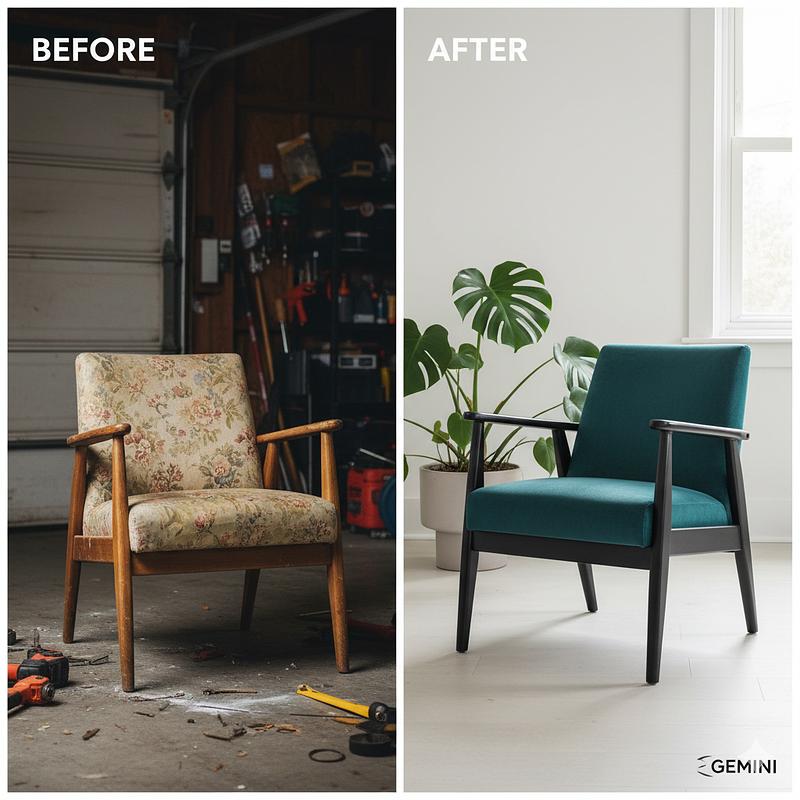
- Upcycle old garments into scarves, bags, or cushion covers.
5. Secondhand & Swapping
- Explore thrift shops, flea markets, vintage boutiques.
- Organize clothing swaps in your community.
- Donate responsibly (only in wearable condition).
6. Cultural & Local Ingenuity
- In India and South Asia, repurposing cultural garments is a centuries-old practice:
- Saris → wrap skirts, dresses, or gowns
- Dupattas → stoles, scarves, or belts
- Kurtas → panels for skirts or tunics
- Kantha / Kutch embroidery → patchwork accents
This not only reduces waste but also celebrates heritage.

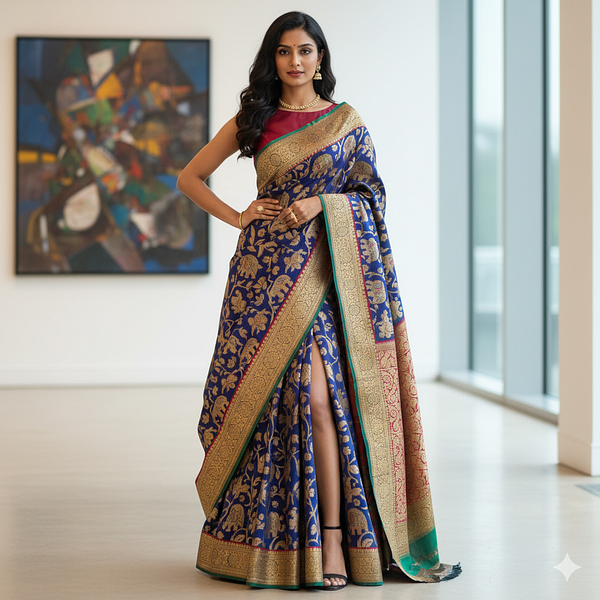
Source: Gemini
📝 A Step-by-Step Capsule Plan
- Audit your wardrobe — keep only “love” and “essential” items.
- Define your needs — consider lifestyle, climate, and cultural events.
- List core categories — bottoms, tops, dresses, outerwear, shoes, accessories, traditional accents.
- Source consciously — buy secondhand first, then ethical/impact brands if needed.
- Experiment with combinations — photograph outfits to track what works.
- Repair or release — fix what you can, swap or donate what you don’t use.
👗 Sample Capsule Wardrobe (Indian Context)
+-------------+-----------------------------+-----------------------------+
| Category    | Example Piece               | Twist / Notes               |
+-------------+-----------------------------+-----------------------------+
| Bottom      | Cotton trousers (neutral)   | Comfortable with kurtas     |
| Top         | White cotton shirt / tee    | Layer with dupattas         |
| Dress       | Simple midi / shirt dress   | Add sari fabric belt        |
| Outerwear   | Lightweight jacket / blazer | Neutral tone pairs with saris |
| Traditional | Repurposed sari wrap skirt  | Heritage + modern style     |
| Shoes       | Neutral flats / juttis      | Accent pair for culture     |
| Accessory   | Handloom scarf / dupatta    | Multi-purpose wrap          |
+-------------+-----------------------------+-----------------------------+
🛒 Shopping With Purpose
Building a capsule wardrobe doesn’t mean never buying again — it means buying better. Supporting platforms that align with sustainability makes a difference.
For example, JeftinStore.com curates products designed with social and environmental impact in mind — from artisan-made goods to eco-friendly essentials. It’s a reminder that every purchase can be a small but meaningful step toward collective change.
🌱 The Benefits
- Less clutter, more clarity — reduced decision fatigue.
- Lower costs long-term — buy fewer, better items.
- Less waste — extend the life of each garment.
- Deeper appreciation — each piece feels intentional.
- Cultural connection — weaving heritage into everyday wear.
✨ Final Word
Sustainable fashion isn’t about deprivation — it’s about curation. A capsule wardrobe gives you freedom from excess, a personal style that lasts, and a direct way to reduce fashion’s footprint.
Start small: repair one piece, repurpose another, choose quality over impulse. Over time, your wardrobe will not only look better — it will tell a story of values, heritage, and purpose.
📚 References (Footnotes)
- Earth.org — Fast Fashion’s Detrimental Effect on the Environment
https://earth.org/fast-fashions-detrimental-effect-on-the-environment/ - Earth.org — Fast Fashion Waste Statistics
https://earth.org/statistics-about-fast-fashion-waste/ - India Today — Circular Economy and Textile Waste in India
https://www.indiatoday.in/environment/story/fast-fashion-slow-fashion-circular-economy-textile-waste-textile-pollution-2702866-2025-04-03 - Hindustan Times — Fast Fashion Grows Quicker than Traditional Apparel Brands
https://www.hindustantimes.com/cities/mumbai-news/fast-fashion-grows-quicker-than-traditional-apparel-brands-101720724354616.html
Institutional Disclaimer
The Triquetrus Institute is an internal research and reflection initiative of Triquetrus Initiatives LLP (India). All content published by the Institute is intended solely for educational and discussion purposes. It does not constitute legal, financial, investment, regulatory, or professional advice and should not be relied upon as such.
Attribution and Usage Rights
Images accompanying this article have been generated using artificial intelligence models and are presented for illustrative purposes only. Such images are synthetic in nature and should not be interpreted as factual representations of real persons, events, or conditions.
This article is subject to the full Content Ownership, Usage Rights, Liability Disclaimer and all applicable Terms and Conditions available at the Triquetrus Collective Legal Portal:
https://ti.triquetruscollective.com/triquetrus-collective-legal-portal/
Readers agree to these terms by engaging with the content.
Copyright © 2025 Triquetrus Initiatives LLP, India. All rights reserved.